EPAL Board Meeting on 4 December 2025 in Amsterdam
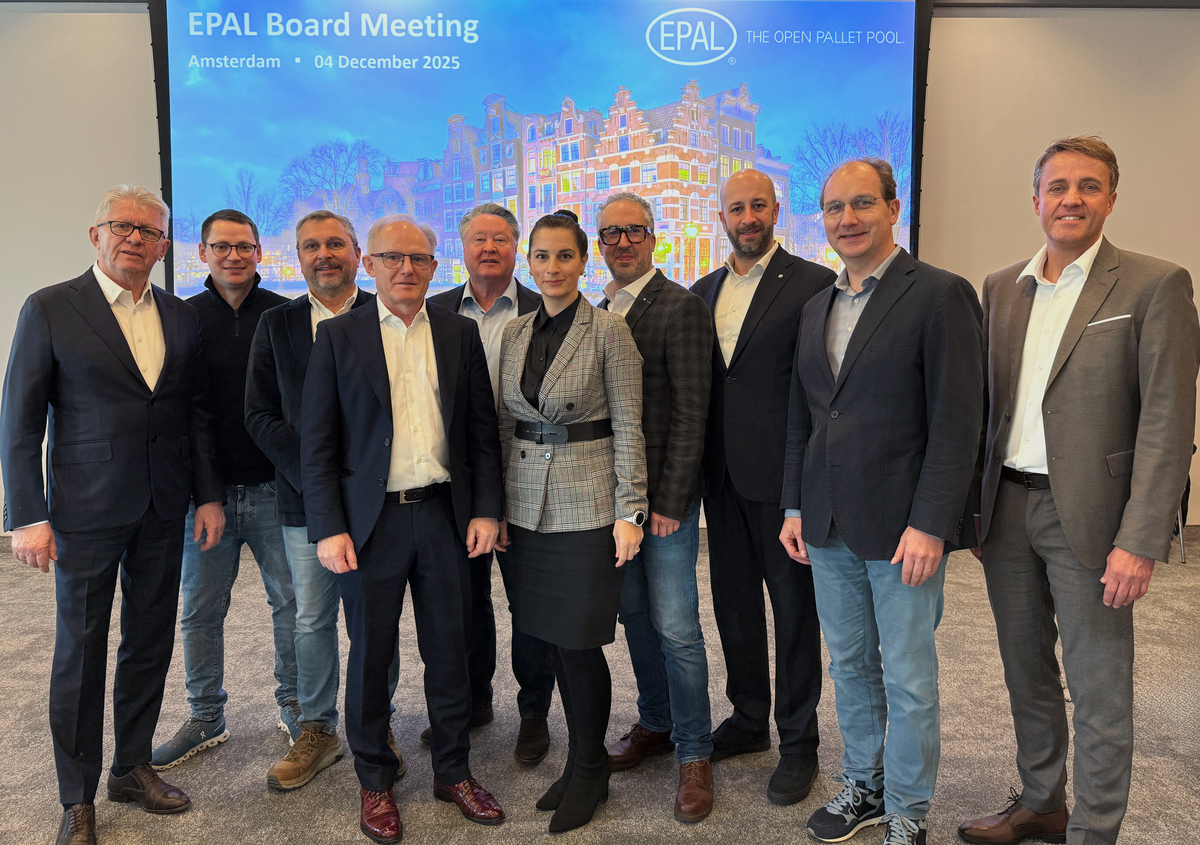
The EPAL Board met in Amsterdam on 4 December 2025 and made important decisions on technical and market-specific issues. The budget for 2026 also sets out the thematic priorities for EPAL's work in 2026.
The year 2025 was marked by the further development of the EPAL CP pallet into the new pallet standard in the chemical industry. As part of the approval of a large number of new manufacturers of EPAL CP pallets in the fourth quarter of 2025, further adjustments to EPAL's technical regulations for CP pallets were decided by the EPAL Board. EPAL is thus pursuing its goal of providing the chemical industry with high-quality CP pallets that meet the requirements of the EU Packaging Regulation (PPWR).
Alexandre Coppée, member of the EPAL Board:
"With the adjustments to the technical regulations for EPAL CP pallets, we are responding to the requirements of the chemical industry, which is increasingly opting for standardised, high-quality EPAL CP pallets. The adjustments to the technical regulations for EPAL CP pallets by the EPAL Board are the result of close cooperation between the chemical industry and EPAL. The chemical industry benefits from the expertise of the pallet manufacturers who are members of the EPAL Board."
Another important topic at the Board meeting was the successful development of the EPAL Euro pallet QR, which was introduced in 2024. By the beginning of December 2025, more than 5 million EPAL Euro pallets with QR codes had been produced. EPAL will continue to promote this exceptional positive development and support EPAL Euro pallet manufacturers in switching to the production of EPAL Euro pallets QR.
Roman Malicki, member of the EPAL Board:
"The development of the production of EPAL Euro pallets with QR codes, with 5 million pallets now produced, is outstanding and an important step towards the digitalisation of the EPAL pallet pool. But this is only the beginning. By continuing to support manufacturers of EPAL Euro pallets QR, EPAL is setting an example for innovation and digitalisation in the wooden packaging industry. The key factor is that users of EPAL pallets can now integrate them even more easily into their digital logistics processes."
The EPAL Board's decision to develop a new e-learning platform aimed at employees of users in industry, trade and logistics also serves to support users of EPAL pallets. Simple explanations will provide users with important information on the use and exchange of EPAL pallets. The training platform will also include the option of taking a knowledge test and, upon passing, receiving a certificate proving successful completion of the training.
Pascal Holliger, member of the EPAL Board:
"The safety and reliability of pallet logistics depends on the quality of the pallets and the qualifications of the employees who use loaded and unloaded pallets every day in industry, trade and logistics. Therefore, it is not enough for us to meet only one of these two requirements with the high quality of EPAL pallets. In future, we would like to focus even more on the use of EPAL pallets in everyday logistics. The e-learning platform will be the first step, followed by further steps to support pallet users."
Another important topic at the Board meeting was a brief preview of EPAL's 35th anniversary in 2026. EPAL is planning various activities to mark the anniversary, including an international conference in June 2026.
The next EPAL Board meeting will take place on 12–13 March 2026 in Nice and will be combined with a strategy workshop.